
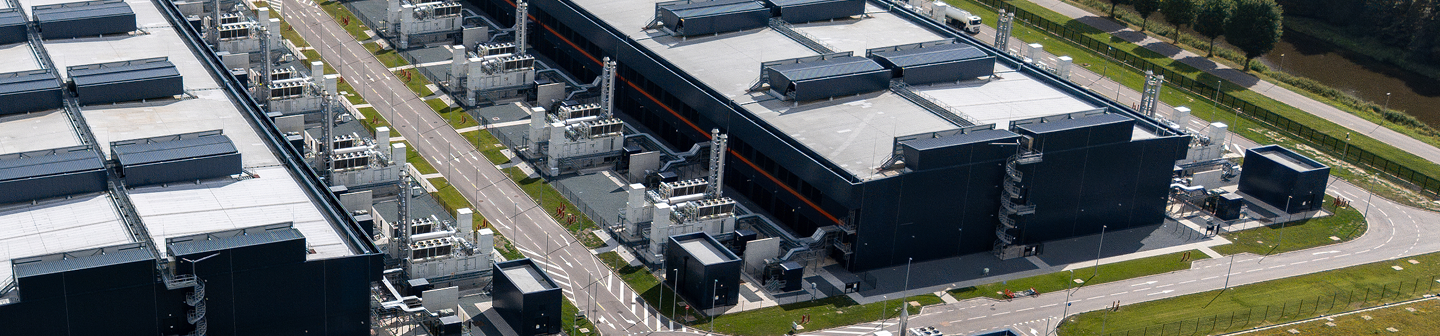
Data Centers
Protecting the Data Center, From Substation to GPU Rack
With American-made Novagard silicones, you can protect equipment across the entire data center footprint. Our materials are naturally stable across a wide range of temperatures and moisture conditions, and we can tailor solutions to optimize thermal management, EMI shielding, dielectric insulation, and long term durability, customizing a formulation to meet the most demanding reliability requirements from the outdoor infrastructure to the data hall.
Application Focus
Novagard materials are positioned to protect the entire data center footprint, from the utility substation to the GPU rack: high-voltage transformers and switchgear, backup generators, battery energy storage (BESS) and on-site solar arrays, power distribution units, GPU and CPU modules and cold plates, server, storage, and network PCBs, EMI gaskets and shielding, liquid cooling manifolds, cable and conduit penetrations, and building envelope and curtain wall sealing, protecting equipment that must run continuously under heat, vibration, electrical stress, and moisture in a 24/7, always-on operation.

Silicones reliably seal, bond, coat, gasket, encapsulate, and thermally manage to protect critical components and systems, such as:
- Power converters, rectifiers, and inverters
- High voltage transformer windings
- GPU and CPU modules and cold plates
- Server, storage, and controller PCBs
- Battery management electronics
- EMI gaskets and shielding
- Sensors, controllers, and circuits
- Cable and conduit penetrations
Why Silicone for Data Center Applications
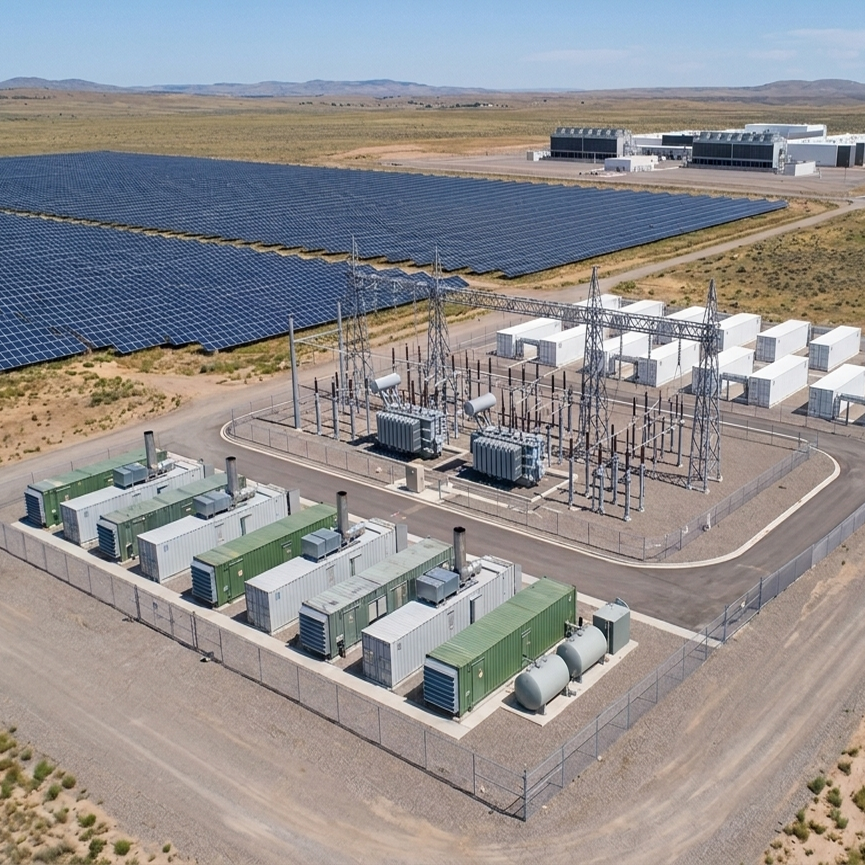
POWER GENERATION AND ENERGY STORAGE
Solar PV Arrays: On site and campus adjacent solar farms increasingly power data center operations. Silicones encapsulate PV cells, pot junction boxes, and seal frames to protect arrays against UV, moisture, and thermal cycling over decades of outdoor exposure. Novagard’s UL certified solar portfolio offers a complete domestic solution for solar power protection.
Utility Substations and High Voltage Transformers: Main transformer windings are potted in silicone to suppress partial discharge at voltages up to 115kV by providing dielectric strengths >20kV/mm. The material insulates between high voltage conductors and dampens vibration to resist cracking at solder joints. Silicone’s low modulus chemistry outlasts rigid epoxy across the 30+ year design life of the component.
Backup Generators: Standby generators and alternators guard against grid interruption. Silicones are used to pot and seal generator electronics that run these machines. High-temperature grades hold the exhaust penetration seals at 200°C and above. From the controller board to the enclosure skin, Novagard silicones ensure power interruptions are minimized.
Battery Energy Storage (BESS): Battery storage enhances power reliability and reduces strain on the grid. Silicones create housing gaskets, intumescent fire barriers, and act as a conformal coating for battery management PCBs exposed to electrolyte outgassing. Energy storage requirements are innovating in parallel to power generation, requiring electrically & thermally conductive silicones developed by Novagard.
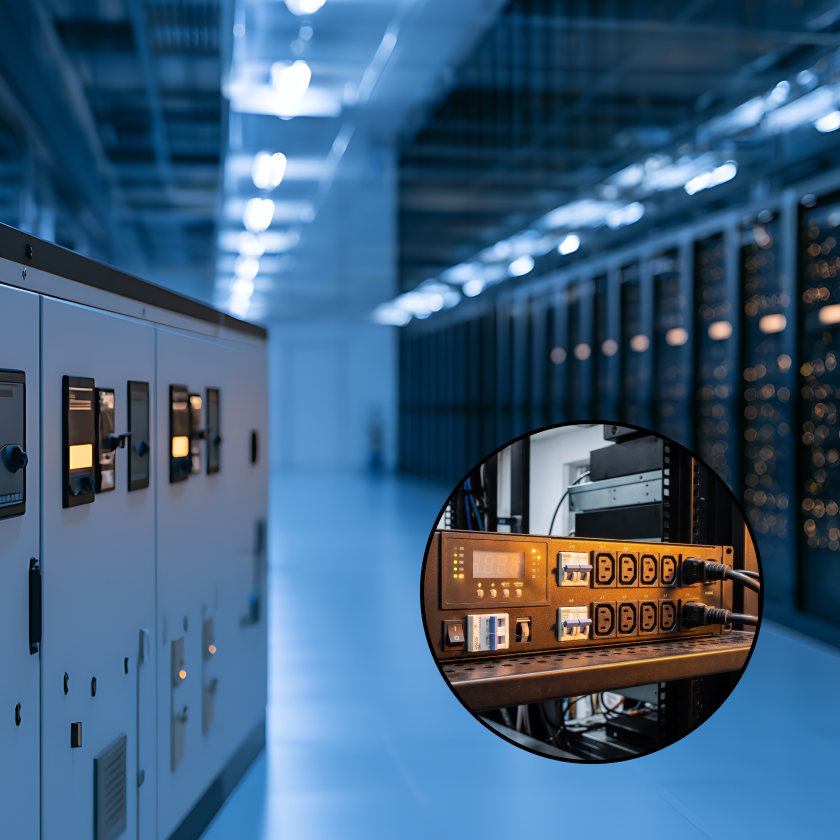
POWER DISTRIBUTION
Step Down Transformers and Switchgear: Inside the electrical room, silicones pot step down transformers and gasket switchgear and panel boards. They insulate high current connections and seal enclosures to protect against dust and moisture.
Power Distribution Units (PDUs): PDUs route conditioned power from the electrical infrastructure to the racks, with one or two units in every rack across the entire data hall. Silicones can be used in three ways in each PDU – potting for the internal transformer windings, conformal coating for the power-monitoring PCBs, and formed-in-place foam gaskets that seal the enclosure. Novagard offers a selection of silicones for each application, protecting power all the way to the rack.
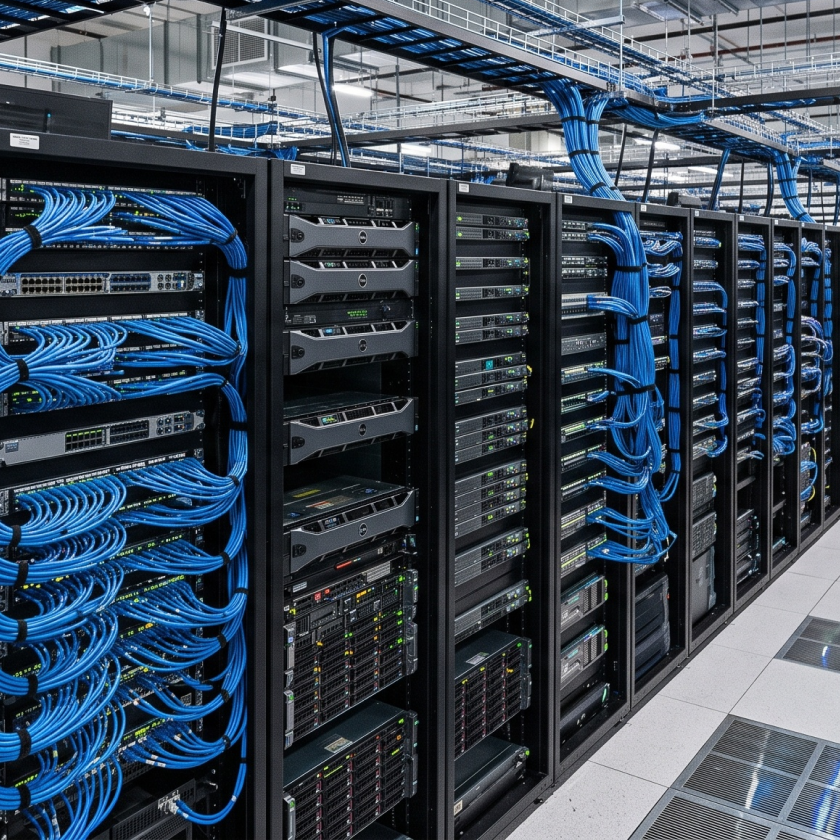
AI COMPUTE DATA HALL
GPU and AI Accelerator Servers: High density GPU racks generate intense, concentrated heat. Silicones are used as thermal interface gels for GPU cold plates and lidless packages, a conformal coating for server motherboards, chassis EMI gaskets, gap filler pads for VRAM and HBM, and PCB level shield can adhesives.
CPU and General Compute: Standard compute rows still demand reliable thermal and electrical protection. Silicones act as thermal interface materials for CPU cold plates and heatsinks, plus ESD seals for rack cable trays.
Storage Arrays and NVMe Clusters: Dense storage hardware runs continuously in tight thermal envelopes. Conformal coatings protect storage PCBs at the assembly level against moisture, dust, and condensation.
Network and Telecom Equipment: Switching and fiber infrastructure carries the data center traffic. Conformal coatings protect switch PCBs while chassis EMI gaskets control electromagnetic interference. Novagard silicones offer long term durability in this environment.
MECHANICAL AND COOLING
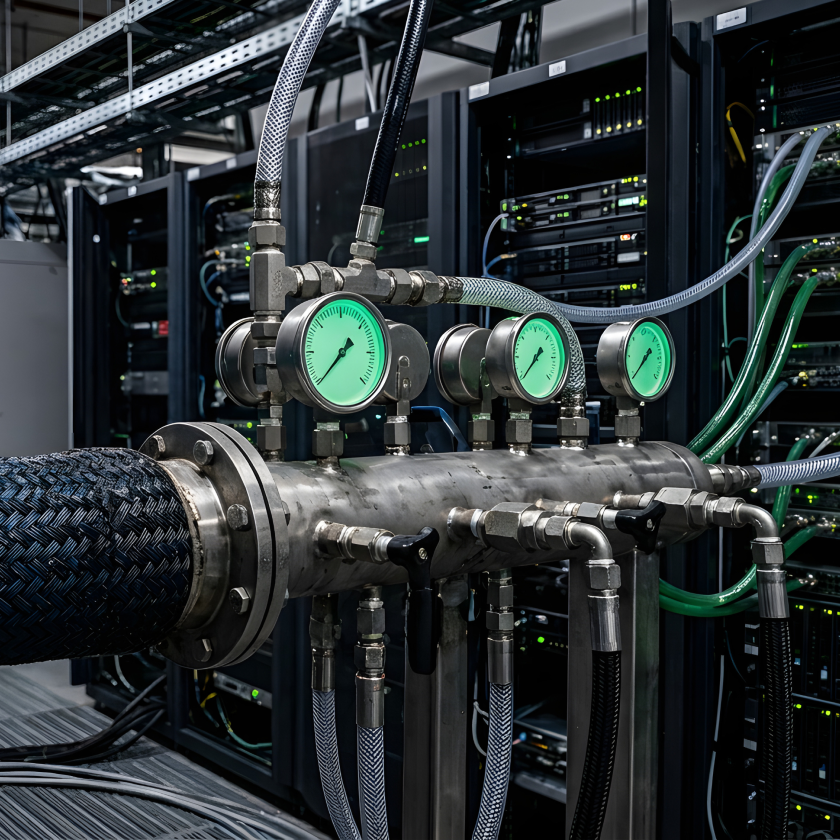
Liquid Cooling Infrastructure: Direct to chip and immersion cooling are now central to high density computing. Silicones provide RTV sealing for cold plate manifolds, immersion stable thermal interface materials, and dielectric fluids for immersion tanks.
Chillers, Pumps, and Coolant Manifolds: The mechanical room moves heat out of the building. Silicones seal pipe fittings and hoses, and act as gaskets for pumps and manifolds to protect against leaks. High temperature greases are used primarily for moving assemblies.
FACILITY AND STRUCTURE
Fire Suppression and Fire Barriers: Life safety systems protect people and equipment. Silicones provide high pressure pipe sealing for suppression lines, fire stop penetration seals, and fire barriers for cell and module separation.
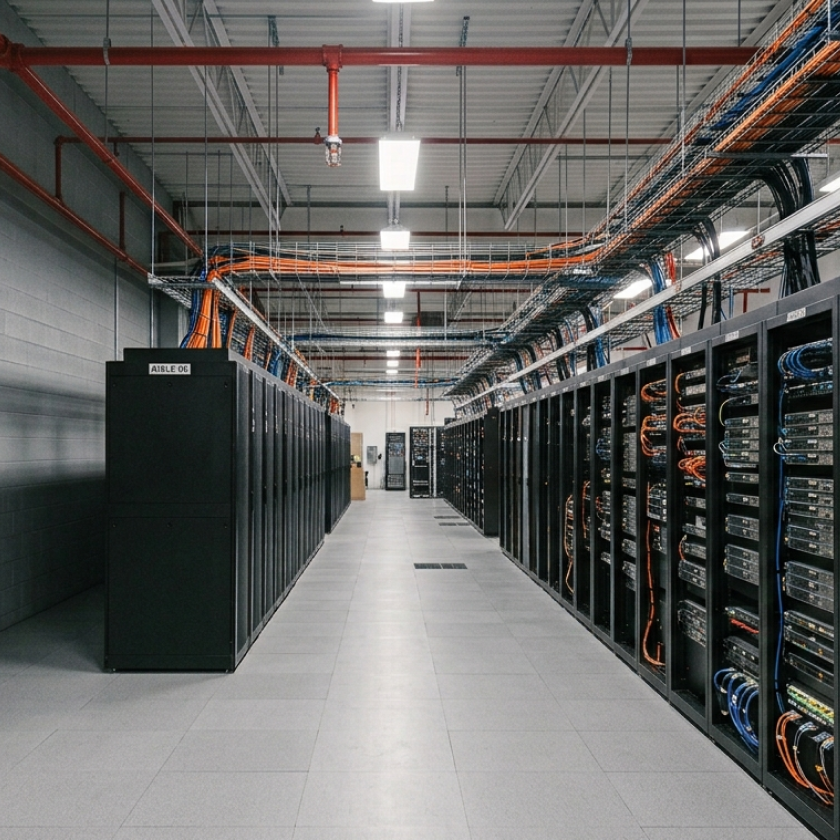
Raised Access Flooring: Raised floors route power, data, and cooling beneath the data hall. ESD sealants help control static across the floor system.
Cable and Conduit Penetration Seals: Wherever cable enters the building or passes between zones, silicones seal penetrations against air, moisture, and fire spread while maintaining structural integrity.
Building Envelope and Curtain Wall: The structure itself relies on weatherproofing. Structural silicones bond and seal curtain wall glazing and weatherproof the building envelope against unwanted air and water intrusion.
